Giving


Notre Dame delivers AI solutions to protect small farmers and the world’s food supply
October 1, 2026
University Contributors
The original article, written by April Toler, was shared on keough.nd.edu.
Despite producing roughly a third of the global food supply, millions of smallholder agricultural workers operate without reliable, localized weather data. Unpredictable droughts, sudden storms, or rapid crop infection outbreaks can wipe out an entire season’s yield, putting vulnerable rural communities at immediate economic risk.
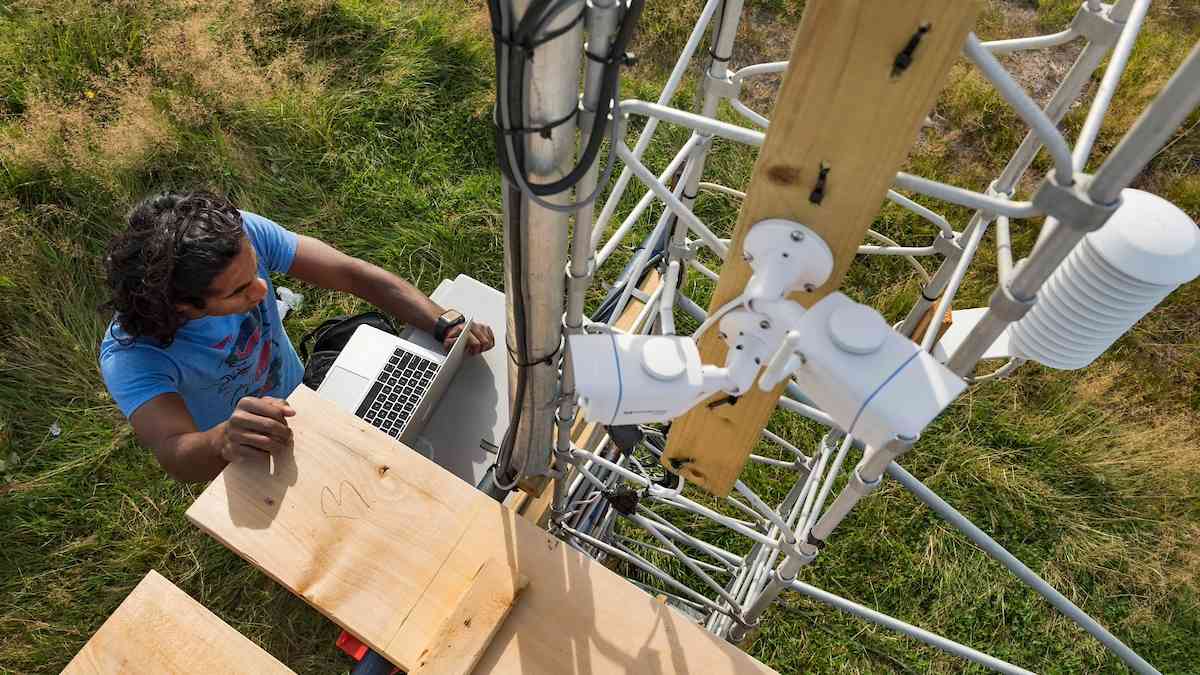
To bridge this information gap, the Agricultural Innovation Mechanism for Scale (AIM for Scale)—housed within Notre Dame’s Keough School of Global Affairs—is collaborating with global partners to bring automated climate and crop forecasting tools directly to agricultural families across East Africa as well as South and Southeast Asia.
Transitioning Innovations from Research to National Scale
The effort anchors a wider $60 million global coalition of academic institutions, nonprofit organizations, and civic leaders aiming to reach 100 million agricultural workers over the next three years. By leveraging modern artificial intelligence, these forecasting systems generate hyper-local predictions at a fraction of the computational cost of traditional methods, pushing automated guidance to users through simple mobile channels like voice calls, text alerts, and interactive platforms.
For Professor Winters, the initiative targets a longstanding hurdle in international development: moving proven, evidence-based tools out of the pilot phase and into nationwide public infrastructure.
“Artificial intelligence is creating extraordinary new possibilities for farmers, but innovation alone is not enough,” Winters noted. “The real challenge is ensuring that these tools become part of systems that can sustainably reach millions of farmers based in low- and middle-income countries.”
By working alongside international development banks, national ministries, and research partners—such as supporting CIMMYT’s satellite-backed pathogen tracking for wheat crops—Notre Dame is helping convert high-tech research into practical safeguards for farming communities worldwide.
Read the full article from the Keough School of Global Affairs ›
Giving Society members and supporters of Notre Dame help make real-world impacts like this possible. Through your generosity, Notre Dame faculty, researchers, and global initiatives can tackle pressing societal challenges, harness emerging technology for the public good, and cultivate solutions that uplift vulnerable communities worldwide. Thank you for helping Notre Dame serve as a force for good in the world.
Recent Stories
Oct. 01, 2026
Notre Dame delivers AI solutions to protect small farmers and the world’s food supply

Sep. 29, 2026
Pope Leo XIV to present Notre Dame theologian John Cavadini with the 2026 Ratzinger Prize

Sep. 24, 2026
Coach Brock Sheahan’s Vision for Notre Dame Hockey

Sep. 23, 2026
Notre Dame researchers developing a new treatment for kidney cancer

Sep. 17, 2026