Giving


Notre Dame Law professor participates in United Nations Consultation on Educational Pluralism
September 9, 2026
University Contributors

The original article, written and published by Elyse Paul, was shared on the Law School website.
Notre Dame Law School Professor Nicole Stelle Garnett traveled to the United Nations in Geneva, Switzerland, to participate in the first Open Consultation on proposed Guiding Principles on Educational Pluralism, an international effort to develop guiding principles for educational systems that embrace a diversity of school providers and educational approaches.
Garnett, who serves on the steering committee for this initiative, joined a diverse group of experts at the consultation, including two United Nations Special Rapporteurs: Farida Saheed, Special Rapporteur on the Right to Education, and Alexandra Xanthaki, Special Rapporteur on Cultural Rights. The gathering marked the first in a series of international consultations designed to gather feedback on proposed Guiding Principles on Educational Pluralism before they are finalized.
The proposed principles seek to articulate a shared framework for how governments can support and regulate a diversity of educational options while, at the same time, guaranteeing all children the right to education.
“By educational pluralism, we mean that the government funds schools and it regulates schools and it operates schools, but it doesn’t just exclusively fund the schools that it operates,” Garnett said. “The Principles embrace the plural delivery and public funding of a variety of types of schools, including religious schools and other private schools.”
The questions at the center of the project are increasingly relevant in the United States, Garnett noted, as parental choice programs expand across the country. But they carry particular significance internationally, where private and faith-based schools often play a central role in educating children.
“In many parts of the world, especially in the Global South, faith-based schools have long been the primary provider of education ” she said. “If we take away the funding, these schools, which excel the critical task of educating the poorest children, may close. If they do, kids who need education the most will lose a lifeline.”
The consultation in Geneva brought together experts from a range of disciplines and perspectives, including United Nations personnel and scholars working in education and human rights from around the globe. Their varied expertise and regional experiences informed discussions surrounding the proposed principles.
Among the broader questions shaping the conversation are how governments should allocate public educational resources, the extent to which private and faith-based schools should be required to follow the same curriculum and practices as government-operated schools, and how educational systems can preserve meaningful diversity and distinctiveness while ensuring quality and accountability.
Garnett’s commitment to the work is informed by the Catholic understanding of the dignity of the human person and preferential option for the poor. Her work on the Guiding Principles, and commitment to educational pluralism more broadly, is motivated by her desire that families, particularly those with limited resources, have meaningful educational opportunities and access to the schools that will serve them best.
For Garnett, the project represents an opportunity to contribute to a global conversation about how educational systems can better serve children and families while recognizing the important role that diverse communities and institutions play in education.
Read the full article online ›
Garnett directs the Law School’s Education Law Project and is a leading scholar on education law and policy, especially parental choice in education. When you support the Notre Dame Law School Annual Fund or join the Order of St. Thomas More, you empower professors like Garnett to advance the school’s priorities in service to the common good—and give future lawyers the opportunity to learn from experts like her.
Recent Stories

Oct. 01, 2026
Notre Dame delivers AI solutions to protect small farmers and the world’s food supply

Sep. 29, 2026
Pope Leo XIV to present Notre Dame theologian John Cavadini with the 2026 Ratzinger Prize
Sep. 24, 2026
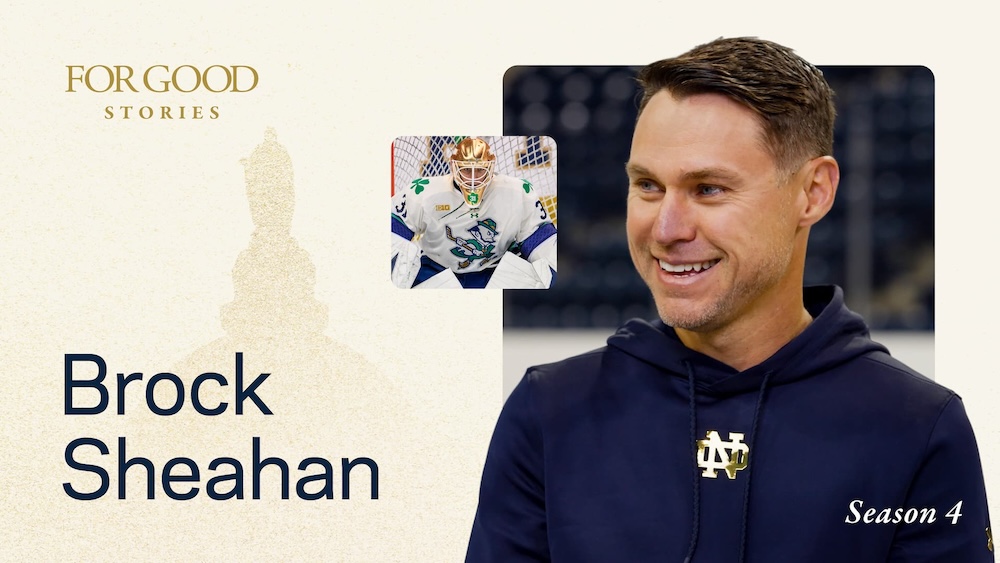
Coach Brock Sheahan’s Vision for Notre Dame Hockey

Sep. 23, 2026
Notre Dame researchers developing a new treatment for kidney cancer

Sep. 17, 2026