Giving


STEM students discover transformative liberal arts experience in Hypatia Scholars Program
August 31, 2026
University Contributors

The original article, written and published by Adah McMillan, was shared on al.nd.edu.
Around the turn of the fifth century, Hypatia was a prominent philosopher, astronomer, and mathematician living in the Roman Empire. Today, she’s the figurehead of the Hypatia Scholars Program at the University of Notre Dame.
Housed in the Reilly Center for Science, Technology, and Values, the Hypatia Scholars Program is a yearlong experience that offers first-year science and engineering students a unique opportunity to explore big ideas about humanity and technology. With a close-knit cohort of other curious students, scholars enjoy stimulating discussions and cultural experiences in and out of the classroom.
Engaging STEM students with the liberal arts
While the program was established in 2025, it was a passion project years in the making.
Supported by a grant from the National Endowment for the Humanities and the Teagle Foundation, Reilly Center leaders worked with faculty to figure out how they could get STEM students more engaged with the liberal arts. They explored different models of core education and teaching strategies, and the Hypatia Scholars Program was the final product.
“Science students sometimes see Arts & Letters core courses as a series of boxes they can check off to fulfill their requirements,” said Robert Goulding, an associate professor in the Program of Liberal Studies and director of the Reilly Center. “We wanted to give them a yearlong experience that would be transformative—that they’ll continue to think back on when they’re juniors or seniors doing their science and engineering research.”
The foundation of the program is two related humanities courses—one each semester of a scholar’s freshman year—that fulfill several University Core requirements, including the University Seminar. The class of 40 students meets twice a week, first for a lecture, then split into three groups for a discussion session.
Each semester, the class has a different theme. For fall 2025, students examined “Artificial Intelligence and the Soul,” and in the spring of 2026, it was “The Costs of Technology.”
The program doesn’t teach students how to use technology, but rather asks how it might change them. With the help of classic books like Mary Shelley’s Frankenstein, Hypatia Scholars learn and discuss the nature of the mind and the origins of AI. In one assignment, students wrote an autobiographical essay and gave it to a chatbot to see how much it could and could not understand.
“They really began to see that there’s a difference in the way we tell our own stories versus what an AI agent is able to generate out of a statistical average of texts,” Goulding said. “We’re not saying that technology’s a bad thing, but we have to understand that every new technical breakthrough in some way changes what it is to be human. We have to keep in mind: What are we willing to lose? What are we willing to augment and gain from technology?”
These questions are increasingly difficult to answer, but scholars are encouraged to meet the challenge head-on.
They’re reading complex texts by Plato and Saint Augustine, as well as key articles in the modern philosophy of mind. They’re running experiments with their own technology use. And they’re already debating how the philosophical and ethical concepts they’re learning will impact the decisions they make as future scientists, engineers, and doctors.
“The amount of reading we’re doing—I’m learning to love it,” said Duncan Lefever, a first-year student majoring in civil engineering. “It’s important that I establish that love now because at the end of the day, my technical education is only four years, but a love of this style of learning is forever.”
Lefever applied for the program because, while he wants to be an engineer, he’s interested in everything in the liberal arts. Hypatia classmate Sissy Page said she applied knowing she wanted to study more humanities than she could get in her neuroscience major.
“A lot of my science classes are big lectures—just the professor giving information,” she said. “This class is more focused on what your opinion is and how we can look at life seeing the big picture, coming at it from different perspectives.”
Page is helping plan a Hypatia Scholars formal for the inaugural cohort, one of many cultural experiences that have been built into the program. Other opportunities include film screenings at the DeBartolo Performing Arts Center’s Browning Cinema and trips to the Art Institute of Chicago and an opera.
A learning community
While the formal isn’t an official piece of the program’s curriculum, it is evidence of how students have made their cohort into a community. Goulding said discussion groups bonded so much that, when given the opportunity to switch to a different group in the second semester, nobody opted to.
“I turned up on the first day of the spring semester with the same 14 faces in front of me,” he said. “They were so excited to be back together.”
While Hypatia Scholars are classmates only during their first year at Notre Dame, the personal connections they make will last far longer. The program offers older Hypatia Scholars opportunities to attend ongoing events and take additional classes with their professors. And while the program is still in its early stages, the program’s leaders are continually brainstorming new ways for students to stay involved.
Goulding said that studying the humanities turns Hypatia Scholars into strong writers, but he notes there are many ways to learn to write. The true value of engaging with the humanities, he said, is how courses open and stretch the mind.
Bringing that to more students is why the Reilly Center is committed to making the program the best it can be.
“The arts and literature should be part of any well-rounded person’s life,” Goulding said. “When the students leave this University, I hope they are the kinds of scientists and engineers who go to the opera and the theater and read a novel—who do all these things that they did in Hypatia Scholars.”
Read the full article at al.nd.edu ›
Students’ holistic formation and opportunities to explore multidisciplinary interests are hallmarks of a Notre Dame education, supported in large part by the Notre Dame Fund. Thank you for creating invaluable opportunities for STEM students who want to find community and develop themselves as whole people.
Recent Stories

Oct. 09, 2026
Visiting scholars advance peacebuilding research at the Kroc Institute
Oct. 08, 2026
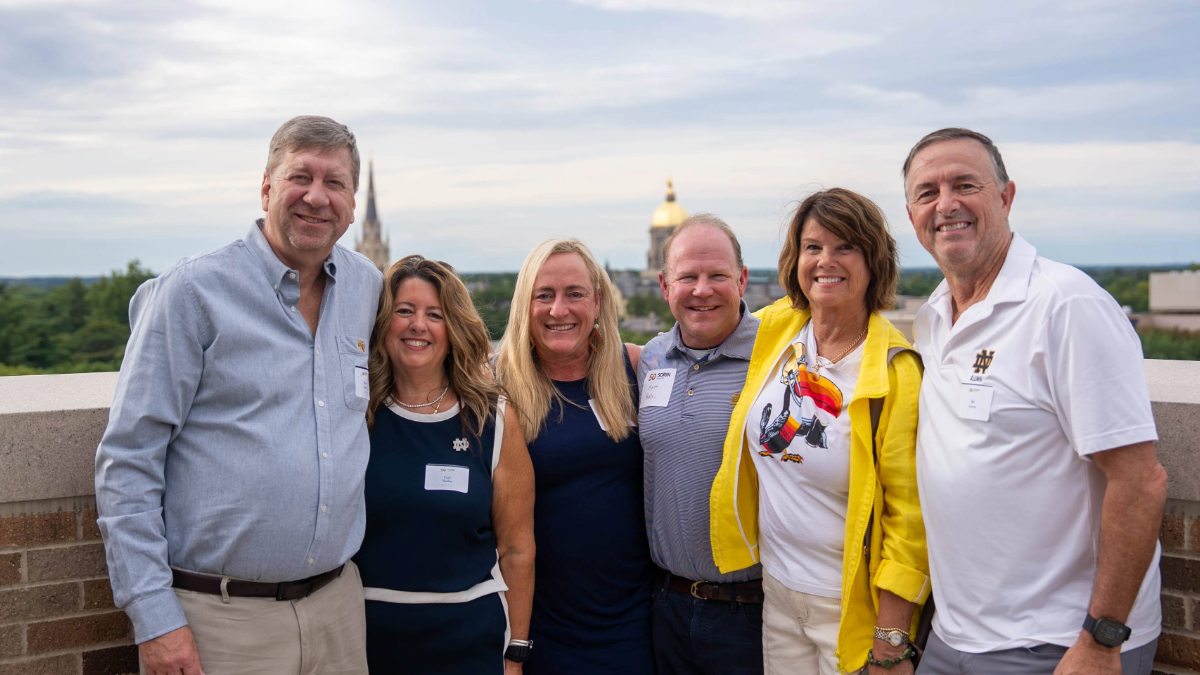
Notre Dame’s 2026 Sorin Reception celebrates 50 years of tradition and impact
Oct. 07, 2026
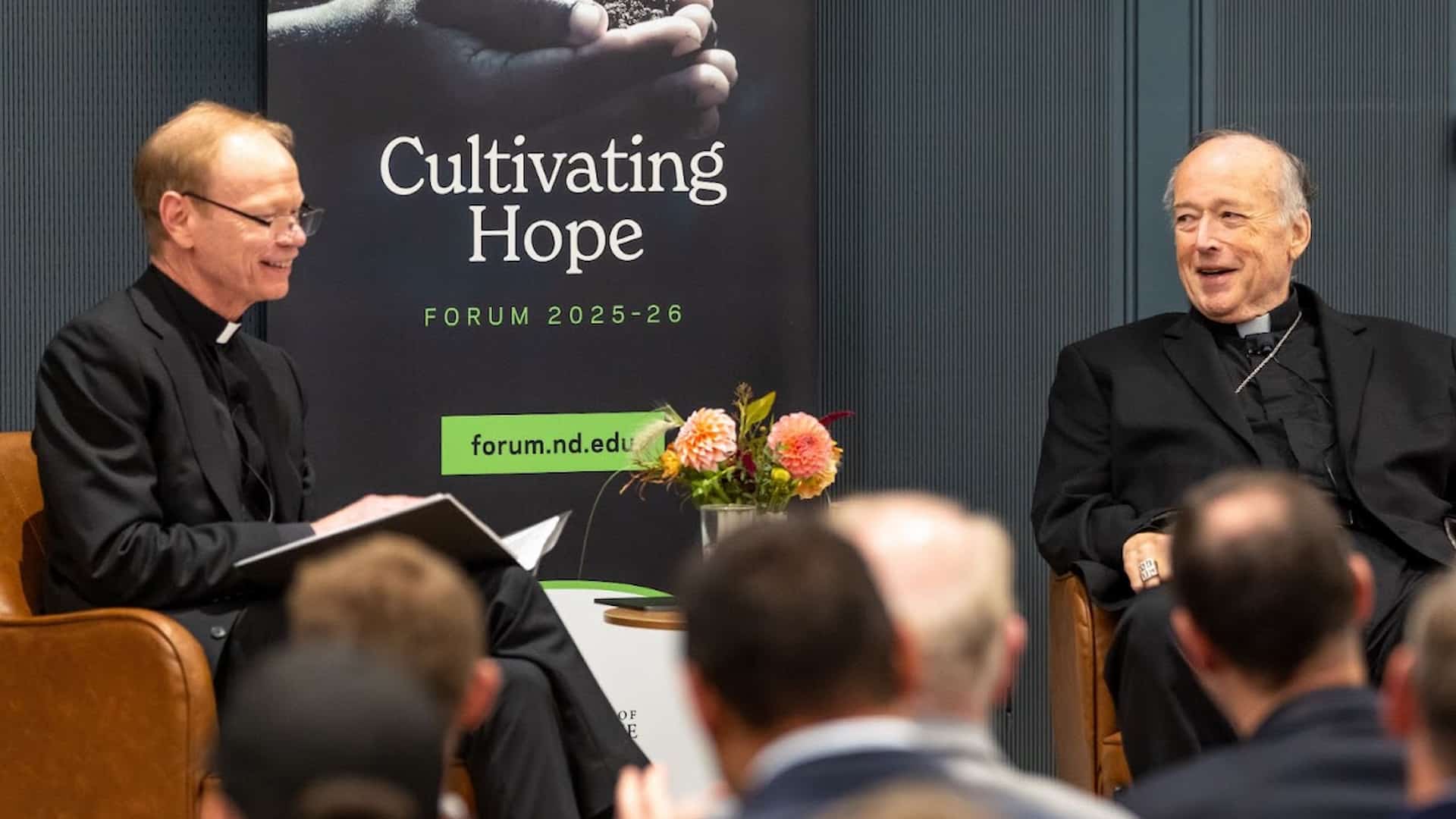
Engaging with questions that matter

Oct. 01, 2026
Notre Dame delivers AI solutions to protect small farmers and the world’s food supply

Sep. 29, 2026